

Alcohol is what is known as a psychoactive substance. This means it affects your mental processes, such as your perception, consciousness, your mood and emotions.
It shares many of the these features with a number of illegal drugs. Not only that, alcohol causes more harm to individuals and to those around them than any other drug, legal or illegal.
Drinking too much alcohol can cause serious and long-lasting damage to a person’s physical and mental health. It is legal in the UK for people over the age of 18 to buy and drink alcohol. However, people may increase their drinking over time, perhaps as part of their social activities, or maybe to help cope during emotional or challenging times. This pattern can cause physical and mental damage, as well as harming a person's home life and work.
Even relatively low levels of alcohol, if drunk over a long period of time, can be damaging. This is why it’s important for people to understand the safe levels of drinking, the impact on their bodies and how long it can affect them.
People drinking at harmful levels can often be unaware they have a problem, or are in denial. Perhaps someone you know might be experiencing problems with alcohol? If you're worried about your own or someone else's drinking, speaking with them about it could be a positive step toward their recovery journey? Your support could play a crucial role in potentially saving their life.
On these pages you’ll find further information on alcohol and what it does, as well as links to tools that can help you calculate how much you drink, how long the alcohol stays in your system and where your consumption is in relation to safe drinking levels.
Click on the below buttons for more information and how to access help.
Alcohol is, strictly speaking, ethanol – a chemical produced by brewing or distilling using grains, fruits or vegetables - with the following impacts on your physical and mental health:
- It affects your brain function, with a major result being lowered inhibitions and increased risk-taking. The more you drink, the greater the chances of finding yourself in dangerous situations through poor decision-making or misjudgement, as well as making yourself vulnerable to crime or being exploited.
- Alcohol is toxic and contributes to or causes more than 60 serious or chronic medical conditions, including:
- mouth, throat, stomach, liver and breast cancers
- high blood pressure
- cirrhosis of the liver
- depression.
- Your liver and kidneys must work to filter it from your blood and remove it from your body. The more alcohol you drink, the harder your body has to work. Your liver can only process alcohol at a certain rate, so if you drink heavily over a long period of time your body will be unable to process the toxins in your bloodstream and you risk causing long-term and irreparable damage to your liver and other organs.
- Drinking too much alcohol over a long period of time also often leads to weight gain, with an increased risk of developing diabetes. It can also interfere with the absorption of essential nutrients, meaning your body doesn't get the minerals it needs to work properly. This can lead to serious health conditions.
- Because alcohol is a ‘depressant’ (disrupting your nerve transmission in the brain) it is especially dangerous when mixed with any illegal drugs or prescription medications which have a similar effect. The combination can easily and rapidly lead to drowsiness, unconsciousness, vomiting and even death.
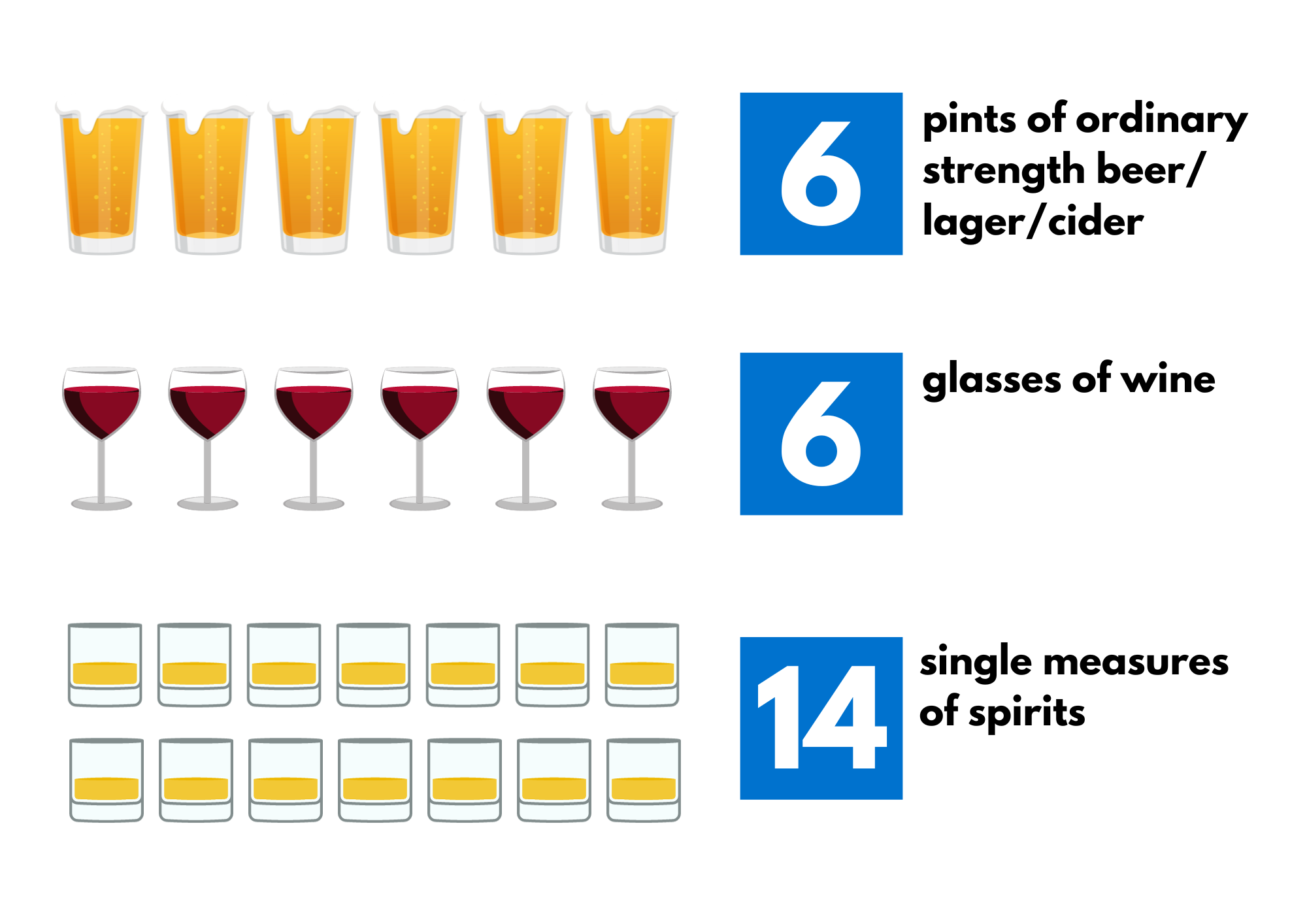 It’s important to note that the amount of alcohol in a drink (alcohol by volume, or ABV) varies considerably, even between similar types of drink. For instance, a pint of strong lager (5.2%) will contain three units, while the same quantity of lower strength lager (3.6%) will be two units.